

In our data-driven world, there is an increasing demand for dynamic, trustworthy, and expandable storage options. This is where object storage comes into play, providing a dynamic and reliable storage solution. Object storage is a groundbreaking architecture that revolutionizes how data is handled, treating it as distinct objects instead of traditional blocks or files.
Essentially, data is paired with its related metadata and a unique identifier, all tied up into a single, compact unit called “object”. This new way of storing files doesn’t use the common hierarchical structure, which makes it very scalable and efficient, especially when managing sizable, unstructured data pools.
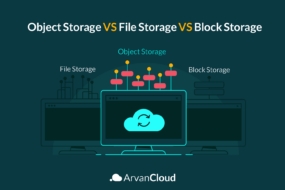
Unlike conventional file storage, which files data in a directory hierarchy and retrieves it via a path, object storage employs a flat address space, creating incredible scalability. Also, the metadata offered by object storage enhances the storage system’s capabilities, allowing for better data management and analysis.
If you want to understand this product’s fundamental concepts and use cases, continue reading. This article will answer your questions about object storage, its basic concepts, and use cases.
Also, if you’re new to object storage, check out What Is Object Storage. It’s a great resource for learning more about this technology.
Key Components of Object Storage
Object storage architecture revolves around the concept of the “object,” which serves as a container containing three essential elements: the data, the metadata, and a globally unique identifier. These components work together to create a robust and efficient storage system.
1. The Building Blocks: Objects
At the heart of object storage architecture lies the “object”. Think of an object as a container that holds the three essential parts mentioned above. The data is the real meat of the meal, the basic information you want to store, and the reason why you’re using object storage in the first place.
The metadata, on the other hand, is like the seasoning that gives the data its distinct flavor. It comprises attributes that offer a detailed description of the data, helping to distinguish one object from another. This could include anything from the data’s creation date, size, type, and more.
Lastly, there’s the globally unique identifier, the unique key given to each object that acts like the object’s name tag. This identifier streamlines the retrieval process, making it a breeze to locate any piece of data, no matter how vast the data pool you have.
2. The Storage Spaces: Buckets
Once you’ve got your objects, where do you put them? That’s where buckets come into play. These are logical units that serve as storage spaces for your objects.
Now, suppose you’re picturing a traditional file storage system with its complex hierarchical structure of directories, subdirectories, and files nested within each other like Russian dolls. In that case, you need to erase that image. In the realm of object storage, things are more straightforward.
Buckets don’t nest within one another; they all exist on the same level, like a row of houses in a neighborhood. Each bucket stands independently, and each object inside a bucket can be accessed directly. This flat structure paves the way for an organization and retrieval of data that is not just easier, but also allows for incredible scalability.
Whether you have a hundred objects or a hundred million, object storage easily handles it, making it a perfect choice for businesses dealing with massive amounts of data.
Object Storage Architecture
Object storage architecture includes several essential elements that form the foundation of robust storage environments. These elements play a critical role in ensuring efficient data management and accessibility.
Object Storage Systems
Object storage systems rely on a distributed storage architecture to achieve optimal performance and scalability. This architecture perfectly integrates the essential elements and enables efficient data distribution across multiple locations, ensuring high availability and fault tolerance.
Distributed Storage Architecture in Object Storage
In the process of object storage, the distributed storage architecture serves as a pivotal component. The underlying principle involves distributing data across various geographical locations. This strategic distribution not only elevates data availability but also ensures its durability. The design reduces the risk of data loss by ensuring no single point of failure. This makes the system more secure and reliable.
Redundancy and Data Availability in Object Storage
Redundancy and data availability are necessary to have an efficient object storage system. Techniques such as erasure coding or replication are commonly employed to enhance redundancy and, of course, data availability. If a data center goes through downtime, the object storage system can recover the inaccessible objects from alternative locations. This ability minimizes potential downtime and guards against data loss.
Use Cases of Object Storage
Now we will discuss the various use cases of object storage and the advantages it offers in each use case.
1. Leveraging Object Storage for Robust Data Backup and Archive
Object storage truly shines when it comes to data backup and archiving. With its scalability, durability, and cost-effectiveness, it’s the perfect solution for preserving large volumes of data with peace of mind.
With its capacity to accommodate the increasing data needs of organizations, object storage can maintain data availability for a long time. The unparalleled longevity it offers makes it an ideal choice for organizations aiming for long-term data retention and retrieval.
2. Cloud Applications and Web Development with Object Storage
When considering storage solutions for cloud-native applications and web development, object storage stands out due to its flexibility and scalability. It provides an adaptive storage solution that grows alongside your business needs.
This is particularly beneficial for accommodating user-generated content, ranging from photos and videos to a wide array of unstructured data. The agility of object storage makes it a great choice for dynamic environments like web development and cloud-based applications.
3. Big Data Analytics and Machine Learning with Object Storage
In the fast-paced world of big data analytics and machine learning, dealing with large quantities of unstructured data is a common challenge. Object storage not only provides a robust framework for storing such massive volumes of data but also facilitates the processing of this data.
A distinguishing feature of object storage is the rich metadata associated with each object, which can be used to enhance data analysis and processing. Thus, object storage is important in streamlining operations and deriving valuable insights in big data and machine learning scenarios.
4. Internet of Things (IoT)
With billions of interconnected devices, the IoT ecosystem produces a large amount of data that needs to be stored, managed, and analyzed. The scalability of object storage and its capability to handle metadata make it a superior choice for managing large-scale data.
Due to the large volume and variety of data generated by IoT devices, object storage’s ability to scale on demand and process metadata efficiently helps it handle IoT data complexities effectively. Thus, object storage is considered a robust and reliable solution in the world of IoT.
Implement Object Storage
Finding the perfect object storage solution for your business is crucial to effectively managing and protecting your valuable data. A wide array of factors must be taken into account when making this decision, including the nature and size of your data, performance demands, budgetary constraints, and your overall business objectives. Below, we explore the critical aspects to consider when implementing an object storage solution.
1. Key Factors to Consider When Selecting an Object Storage Solution
Scalability
As your business grows, so does the volume of data you need to manage. A flexible object storage solution should scale with your needs, ensuring that storage capacity can be increased easily without compromising performance.
Data Protection Features
The most important thing is to keep your info safe. Choose an object storage solution that offers robust data protection features, such as built-in redundancy, encryption, and versioning, to minimize the risk of data loss or corruption.
Interoperability with Existing Systems
Your chosen object storage solution should integrate perfectly with your current infrastructure, allowing easy data migration and compatibility with existing applications and services.
Support for Standards
Look for an object storage solution that adheres to widely-accepted standards, such as RESTful APIs, which promote efficient data management and ensure a future-proof solution that can adapt to evolving technologies.
2. Arvancloud Object Storage
Arvancloud Object Storage is a comprehensive and reliable storage solution designed for your unique business requirements. With its instant accessibility, easy migration, and exceptional stability and accessibility, it’s the ideal choice for businesses looking to implement a powerful object storage solution.
Don’t compromise on your data storage needs, give Object Storage a try and experience the difference. Visit our website and sign up for the basic plan with 5GB of free object storage and 20GB of free traffic. Experience the power of Arvancloud Object Storage and discover how it can revolutionize how you manage and protect your data.
Best Practices for Object Storage
Object storage offers numerous benefits for storing and managing large amounts of data. It is essential to follow best practices that ensure data durability, performance, and efficient management to make the most out of this storage approach.
1. Data Durability and Redundancy
One of the key elements to ensure maximum data life is the successful implementation of redundancy strategies such as data replication or erasure coding. These strategies protect your data from being lost due to unforeseen circumstances or system failures. However, merely setting up these systems is not enough. It is crucial to regularly assess and test these redundancy strategies, ensuring they perform as expected and can restore data when needed. This proactive approach will prepare your systems for any potential data loss eventuality.
2. Boost Performance Through Strategic Measures
To improve your object storage system, consider implementing strategic measures to boost performance and streamline data management.
Leveraging Caching and Content Distribution Networks
To significantly enhance your data access speed and reduce latency, consider integrating caching mechanisms and content distribution networks (CDNs) into your storage architecture. This practice is especially beneficial when dealing with frequently accessed data from different geographical locations. By storing copies of data at various points of presence (PoPs), CDNs ensure faster and more efficient data delivery to the end users.
Manage Metadata Effectively
The efficient management of metadata is another technique for amplifying your data retrieval and analysis capabilities. Consider employing a metadata indexing system to streamline search operations. By doing so, you not only optimize your data storage but also make the process of locating specific pieces of data simpler and faster.
Data Lifecycle Management
It is important to implement appropriate strategies to ensure effective data lifecycle management and optimize costs and performance.
Tier and Storage Classes
The practice of data tiering and the careful selection of storage classes play a significant role in optimizing both costs and performance. By storing frequently accessed data in higher-performance tiers and relegating less frequent data to lower-cost tiers, you balance cost efficiency and speed of data access. This data placement strategy can be tailored to your needs, ensuring optimal storage performance.
Establish Robust Data Retention Policies
Usually, the first thing to consider in businesses is data security and management. Therefore, it is necessary to set up effective data preservation policies. Such policies define the duration for which data should be stored and when it should be deleted or archived. By doing so, you ensure compliance with relevant laws and regulations and effectively manage your storage costs. These policies serve as guidelines that aid in decision-making processes about data storage, retrieval, and deletion. Remember, a well-crafted data retention policy can be the difference between data chaos and data harmony.
Conclusion
In a nutshell, object storage is a major player in today’s data storage game. As the data deluge keeps rising, so will the need for scalable, dependable, and cost-effective storage solutions like object storage. By mastering its basics, architecture and various applications, you’ll be well-equipped to sail smoothly in this ever-evolving sea of data storage.